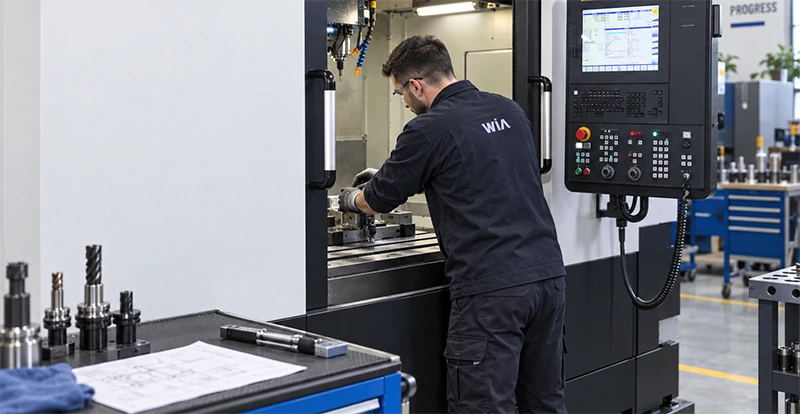


Repeat production of a part should not depend on whether an employee remembers the tool positions, work zero, or the sequence for installing fixtures. This information is recorded in advance so that the setup can be reproduced according to the same proven procedure when a new batch is launched. A CNC setup sheet brings this information together in a single document.
It connects the manufacturing process with the practical preparation of the equipment. The sheet records the information required before the first cycle: which fixtures and tools to install, how to position and clamp the workpiece, which work offsets to set, which CNC program to use, and what to check before cutting begins.
What is a CNC setup sheet and why is it needed?
A setup sheet is a process document that records the data required to prepare a specific machine for a particular operation. It does not replace the part drawing, CNC program, manufacturing process, or equipment operating instructions. Its purpose is to bring together the practical information required to reproduce the setup.
Such a document is particularly useful for repeat orders, multi-shift production, and a wide range of parts. It reduces the time spent searching for information, lowers the risk of incorrect tool or fixture installation, and makes it possible to reproduce a proven machine configuration several weeks or months after the previous batch was produced.
The operator or setup technician receives a clear equipment preparation procedure, while the responsible specialist can verify whether the actual configuration complies with the approved manufacturing process. In serial and small-batch production, this helps reduce setup time and minimize differences in machine preparation between shifts.
What sections does a CNC setup sheet contain?
The contents depend on the type of equipment, the complexity of the part, and the company's internal requirements. The sheet should contain enough data to determine what is being machined, which machine is used, how the workpiece is installed and clamped, which tools are required, and which parameters must be set before startup.
A setup sheet usually includes:
- part designation and name, order or batch number;
- machine name and identifier;
- equipment model and type of fixture used;
- the name or number of the CNC program and its storage location;
- a tool list with magazine or turret positions;
- a sketch of workpiece installation and location;
- work zero points and the required tool references;
- cutting parameters and inspection dimensions;
- additional instructions that must be considered before the trial run.
If the orientation of the fixture and workpiece is important for reproducing the setup, a graphical diagram is added. It shows locating surfaces, axis directions, clamping points or areas, and the actual workpiece position. The purpose of the diagram is to allow the setup to be reproduced unambiguously rather than to duplicate the complete engineering drawing.
What tool and fixture information should be recorded?
For each tool, the position number, purpose, and parameters required for correct installation and use are specified. For milling tools, these may include the magazine pocket number, holder type, length or overhang, and, when necessary, diameter. For turning tools, the sheet may specify the turret position, holder type, insert, and tool orientation.
A separate list is prepared for fixtures and other workholding equipment. For non-standard items, the designation, installation method, and clamping details are recorded. A short instruction should explain which surface is used as the datum, how the fixture should be oriented, and what must be checked after clamping.
Cutting parameters are also entered into the setup sheet. They are taken from the approved manufacturing process. If adjustments are required after trial machining, the new values are recorded according to the procedure established by the company after the changes have been confirmed.
Who creates the setup sheet and who is responsible for keeping it up to date?
The contents are usually prepared by a process engineer who develops the manufacturing process and determines the workpiece location, tooling, fixtures, and sequence of operations. A CNC programmer, production supervisor, and experienced setup technician may also be involved because they are familiar with the characteristics of the specific machine, control system, and working area.

Before the document is released to production, it should be prepared so that another qualified employee can reproduce the setup without additional verbal explanations from its author. The information should be reviewed whenever fixtures are replaced, the operation is transferred to another machine, or the CNC program, workpiece location, tools, or other parameters affecting equipment preparation are changed.
How is a CNC setup sheet created?
First, the machine and the specific operation are defined, followed by the workpiece locating scheme and fixture configuration. A tool list is then created, work offsets are specified, and the required process parameters are entered. The completed setup sheet is checked directly during the actual machine setup.
A practical sequence may look like this:
- Identify the machine and the specific operation.
- Check the source documentation for the part.
- Determine the locating surfaces and workpiece clamping method.
- Assign the tools and their installation positions.
- Record the work coordinate system and zero points.
- Enter the cutting parameters and inspection dimensions.
- Add instructions for the trial-run sequence.
- Verify the setup sheet during the actual setup.
- After the result has been confirmed, save the current version of the document.
During verification, the workpiece must be clamped according to the diagram in the setup sheet, and the positions of the axes, work zero points, and fixtures must be checked for correctness. If the actual setup differs from the configuration for which the CNC program was prepared, the result may be a shifted toolpath, dimensional errors, or an increased risk of collision.
CNC lathe setup sheet
For turning equipment, the key factors are the workpiece clamping method, workpiece projection from the chuck, jaw position, tool positions in the turret, and tailstock or steady-rest settings when these devices are used. The setup sheet should therefore clearly define the workpiece clamping arrangement and tool positions.
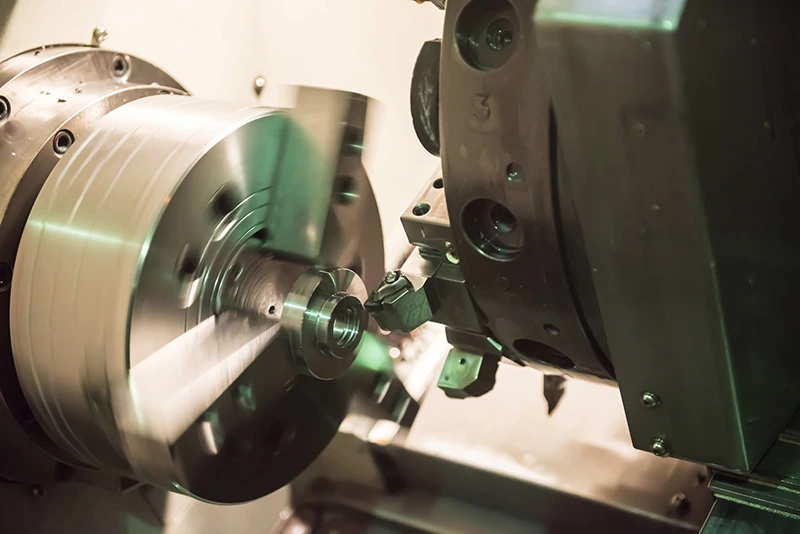
It typically specifies:
- the clamping method and workpiece projection from the chuck;
- the position number of each tool in the turret;
- the holder type and cutting insert;
- the work coordinate system and work zero position, including the Z-axis reference;
- permitted tool overhang;
- the sequence for inspecting the first part.
If a CNC turning operation setup sheet is prepared for a complex part, additional information may be recorded for driven tooling, the sub-spindle, Y-axis, and other controlled units. In multi-axis machining, it is particularly important to clearly link each tool, work coordinate system, and specific program operation. The catalog includes 5-axis turn-mill centers for which this level of setup detail is especially important.
CNC milling machine setup sheet
For milling equipment, the main focus is on the position of the workpiece on the table, fixture installation, the position of the work coordinate system, tool parameters, and safe movement zones. The documentation should make it possible to reproduce this configuration accurately during every subsequent setup.
The sketch shows the position of the vise, fixture plate, or special fixture, the locating surfaces, the workpiece position, and the directions of the X, Y, and Z axes. If several sides of the part are machined in one setup, the work coordinate systems used and the sequence of operations are recorded.
When a CNC milling operation setup sheet is prepared for a complex part, the operation of rotary axes, safe positions, and movement restrictions are specified separately. For 5-axis milling machines, this information is particularly important because of their more complex kinematics and the need to control the relative positions of the tool, workpiece, and fixture components.
When setting up vertical drilling and milling centers, the setup sheet records tool positions, work zero points, and other parameters required to reproduce the operation accurately when the next batch is launched.
How do setup sheets for turning and milling differ?
The differences are determined by the machine kinematics and the method of workpiece installation. In turning, the main rotary motion is usually performed by the workpiece, so the clamping method, projection from the chuck, the Z-axis work zero position, and tool positions in the turret are particularly important. On milling equipment, the workpiece is fixed on the table or in a fixture, while workpiece location, the position of the work coordinate system, tool length, and safe movement zones become the key factors.
At the same time, the basic structure of the documents is largely similar. In both cases, the setup sheet should contain enough information to identify the operation, tools, fixtures, work offsets, and process parameters. Detailed descriptions are not always necessary: if the information is already defined unambiguously in another approved document, a corresponding reference, number, or designation is sufficient.
If the employee performing a repeat setup still has to determine which offset to use, how to orient the workpiece, or which CNC program to run, the setup sheet should be clarified. A properly prepared document should allow a qualified employee to reproduce the setup without ambiguous interpretation.
How does a setup sheet reduce the probability of errors?
Repeatable production depends on more than the CNC program alone. The result also depends on whether the actual workpiece location, tool offsets, work zero points, and parameters correspond to the conditions for which the manufacturing process was developed. The setup sheet combines these elements into a consistent instruction and reduces the number of decisions that must be made directly at the machine.
Safety is also important. The document may include limits for tool overhang, required empty adjacent magazine positions, safe movement zones, the trial-cycle sequence, and other conditions that reduce the risk of collision. This information supplements the machine manufacturer's requirements and the company's internal instructions for the specific operation.
This approach reduces repeat setup time and lowers the risk of unsuitable parameters being accidentally transferred into a new setup. These may include spindle speed, feed rate, work offsets, zero-point positions, or other settings associated with a particular operation.
How should CNC setup sheets be stored and updated?
A setup sheet may be stored in paper or electronic form. The important point is that the current version is available to employees, clearly linked to the specific part, operation, and CNC program, and that obsolete revisions are not used when preparing the equipment.
When changes are introduced, the date, revision number, and reason for the update are recorded. An update may be required after changes to fixtures, tools, workpiece location, the CNC program, machining parameters, or after transferring the operation to another machine. In CAM systems, some of the information can be generated automatically as a setup sheet, including, for example, the tool list, tool positions, certain operation parameters, and work coordinate system data. The production document can then be supplemented, when necessary, with information about workpiece installation, fixtures, and the characteristics of the specific workstation.
Proper organization of process documentation is especially important when new equipment is introduced into production. Along with machine setup, personnel must be trained, the setup procedure defined, and the ability to reproduce verified parameters during repeat production runs ensured.
TECHNICAL CLUSTER LLC, the official representative of WIA Machine Tools in Ukraine, supports equipment implementation from selecting the model and configuration according to the customer's technical requirements through delivery, installation, commissioning, personnel training, and further service support. Technical assistance during the startup stage helps personnel become familiar with the equipment and prepare working processes according to the requirements of the specific production environment.