

Horizontal Machining Centers
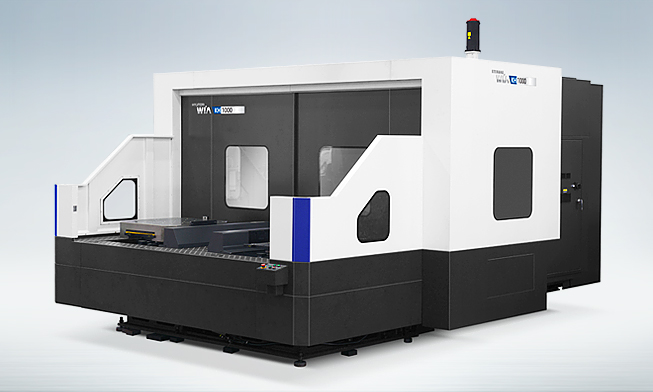
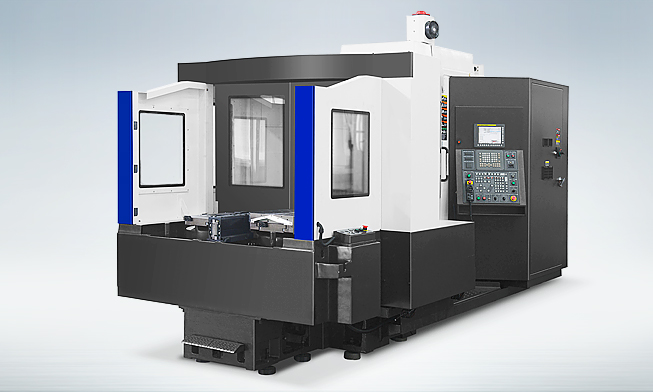
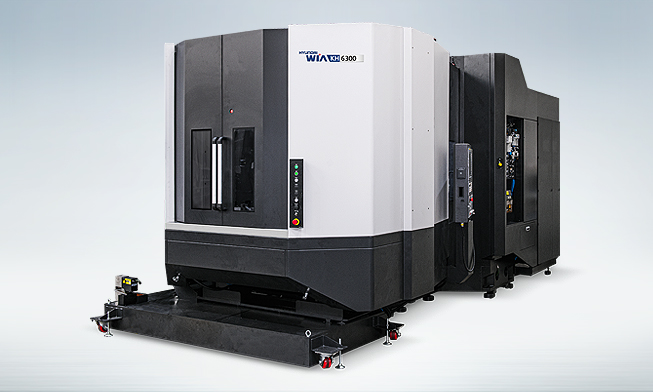
Horizontal machining centers are CNC metal-cutting machines in which the spindle is positioned horizontally and the workpiece is fixed on a worktable or pallet. This configuration is particularly effective for machining complex prismatic and housing-type parts when milling, drilling, boring and other operations must be performed on several sides with a minimum number of setups.
Horizontal machining centers are widely used in mechanical engineering and metalworking, primarily for manufacturing parts with a large number of holes, pockets, slots and mutually positioned machined surfaces. The ability to perform a significant part of the machining process in a single setup helps improve process stability and reduce auxiliary time.
Design features
The main design feature of a horizontal machining center is the horizontal spindle arrangement and the use of a working pallet for mounting the workpiece and tooling. Machining is carried out through controlled movements along the coordinate axes, while the pallet can rotate around a vertical axis, providing tool access to several sides of the part without manual repositioning.
Machines with automatic pallet changers are particularly effective in serial production. While one workpiece is being machined inside the working area, the next part can be positioned and clamped on the second pallet. Once the machining cycle is completed, the pallets are automatically exchanged, reducing machine downtime. Automatic tool changing, in turn, allows different technological operations to be performed sequentially within a single CNC program.
The horizontal configuration also promotes efficient chip evacuation from the cutting area. Under their own weight, chips are more easily removed from the machined surface, reducing the risk of being recut by the cutting tool. This is especially important when machining deep pockets and complex housing-type parts.
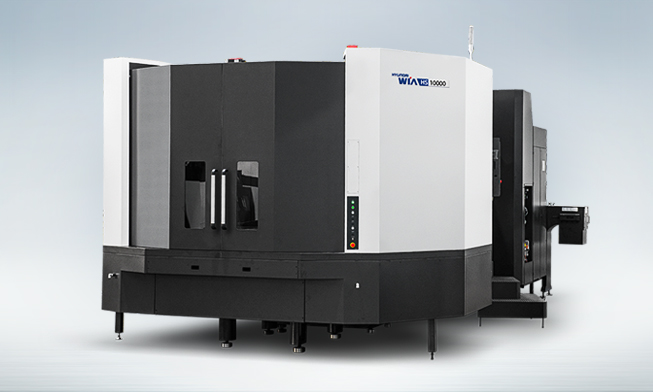
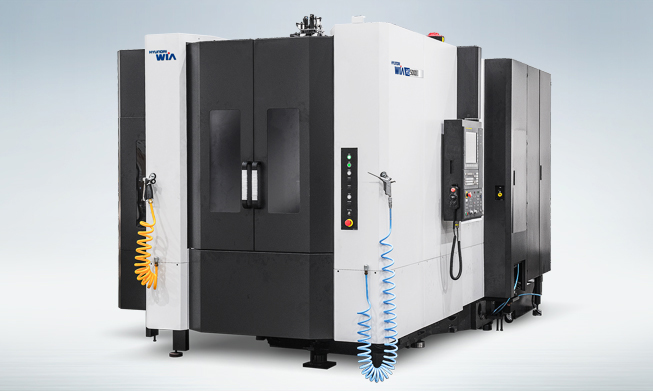
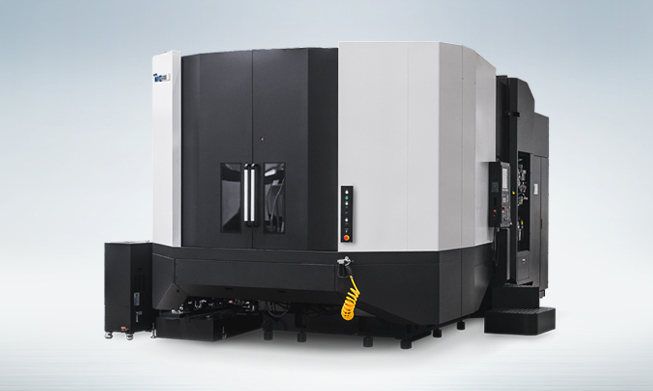
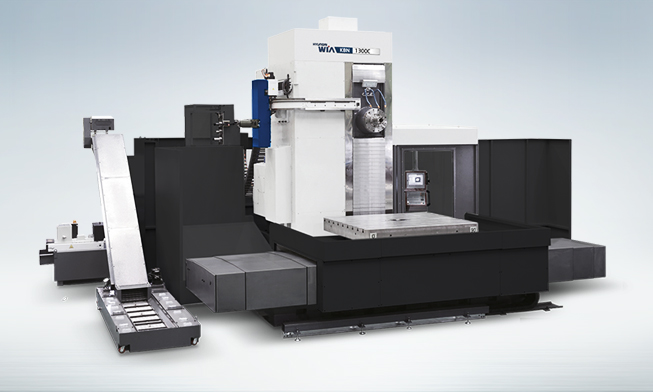
The WIA Machine Tools range includes horizontal machining centers for various production tasks. The HS4000 II and HS5000 II are equipped with standard 15,000 rpm spindles and a standard 40-tool magazine. The larger HS6300 II and HS8000 II are equipped with 630×630 and 800×800 mm pallets with maximum load capacities of 1,500 and 2,000 kg respectively. The KH50G and KH1000 models, featuring box guideways and geared spindle drives, are designed for heavy-duty cutting. The KH1000 can machine workpieces up to 1,900 mm in diameter and 1,500 mm in height, while the KBN1300C horizontal boring and machining center is equipped with a 2,000×1,800 mm table with a maximum load capacity of 15,000 kg.
What are horizontal machining centers used for?
A CNC horizontal machining center is used for comprehensive machining of parts that require tool access to several sides in a single setup or with a minimum number of repositioning operations. Such a horizontal machining center for metal is particularly effective for manufacturing complex housing-type components. Typical examples include gearbox and pump housings, hydraulic blocks, transmission components, gearbox casings and other general engineering parts.
A CNC horizontal milling machine allows milling, drilling, boring, threading and other operations to be performed sequentially within a single machining cycle. This is particularly important for parts where the precise relative position of holes, planes and other features machined from different sides must be maintained.
A CNC horizontal milling center is especially useful in serial and automated production. WIA Machine Tools horizontal centers can be used with automatic pallet changers and can also be integrated into multi-pallet systems and automated production lines, helping reduce auxiliary time and increase the duration of unattended machine operation.
How to select equipment for production?
The selection of a horizontal machining center begins with an analysis of the production task. The key factors include workpiece dimensions and weight, material, the number of sides to be machined, the required operations, dimensional accuracy and surface finish, production volume, cutting tools and technological tooling.
Machine travels, pallet dimensions and load capacity, spindle power and torque, tool magazine capacity and CNC system capabilities must also be evaluated. For serial and automated production, additional factors include pallet changing systems, tool and workpiece measurement systems and the possibility of integrating the equipment into a production line in the future. Installation conditions are also important, including available floor space, foundation requirements, electrical supply and other utilities.
As a result, a horizontal machining center should not be selected based on a single specification from the catalogue, but according to the actual machining process: part material and geometry, the nature of milling and other operations, required productivity and future automation plans. If a company plans to purchase equipment in Ukraine, it is advisable to discuss the technical requirements with specialists in advance and select a configuration that matches the actual production needs.
WIA Machine Tools equipment
The TECHNICAL CLUSTER catalogue includes WIA Machine Tools horizontal machining centers from the HS10000, HS4000/5000 II, HS6300/8000 II, KH50G, KH1000, KH6300/8000 and KBN1300C series. The models differ in working area dimensions, spindle characteristics, pallet load capacity and overall design, allowing the equipment to be selected according to a specific production task.
TECHNICAL CLUSTER LLC is the official representative of WIA Machine Tools in Ukraine. The company provides comprehensive project support, including machine and configuration selection, equipment supply, installation, commissioning, personnel training, warranty and service support. Delivery times and equipment configuration are determined individually based on the technical specification.
If a company plans to buy CNC horizontal milling machines in Ukraine, TECHNICAL CLUSTER specialists will help select suitable equipment based on part dimensions and material, required productivity, the specifics of the technological process and the conditions for machine installation at the production site.