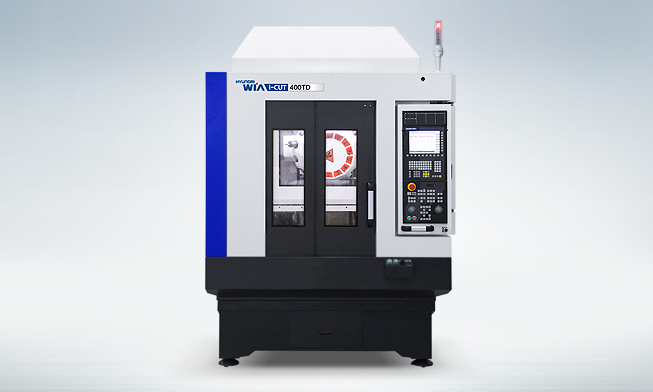
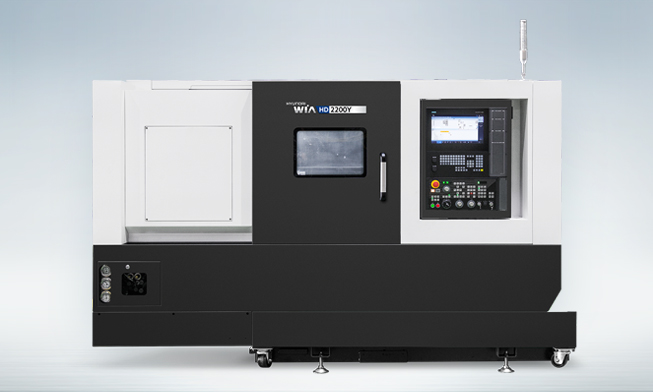
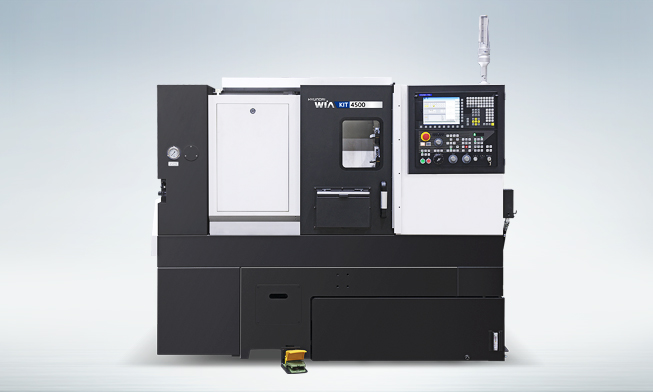
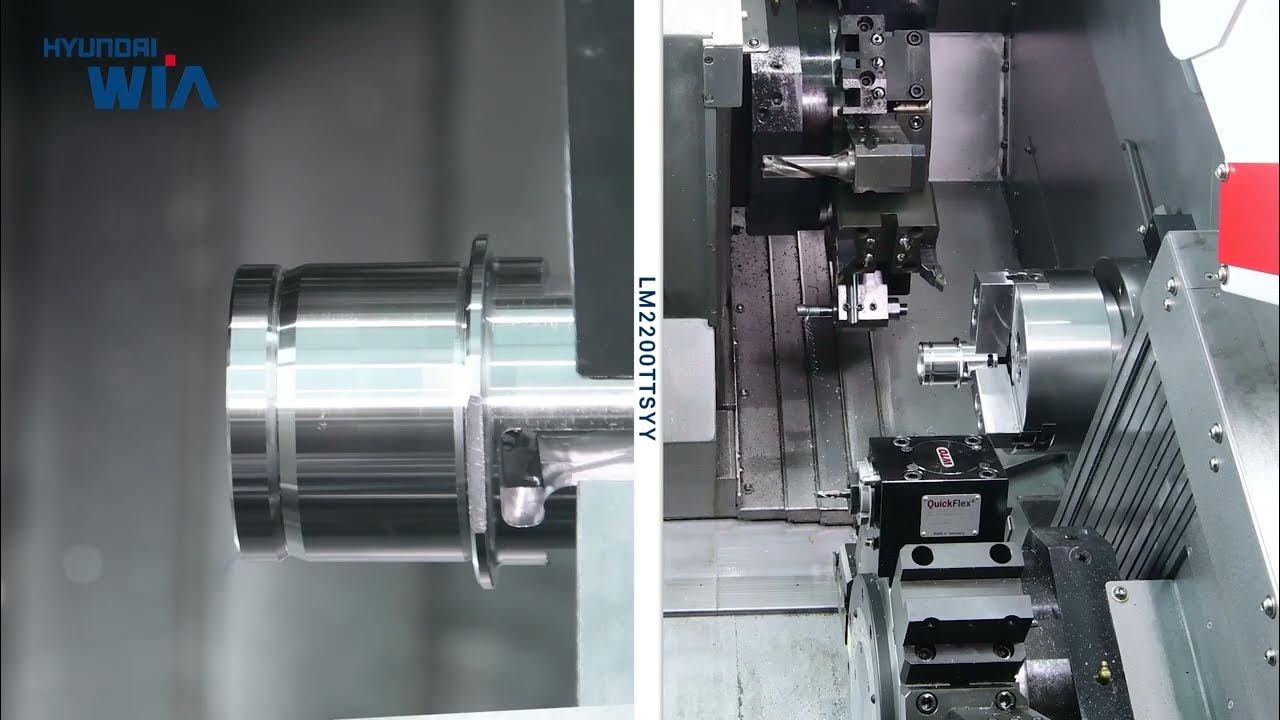
Computer numerical control (CNC) machine tools form the foundation of modern metalworking production, providing high accuracy, repeatability, and productivity in parts machining. When selecting equipment, it is important to consider not only its technical specifications or cost, but also structural rigidity, positioning accuracy, spindle characteristics, the control system, and other parameters that determine operational efficiency and reliability.
Purpose and design features
CNC metal-cutting machine tools are designed for high-precision automated machining of metal workpieces. Thanks to programmable control, they can perform a wide range of machining operations with high accuracy, repeatability, and minimal dependence on the human factor. Equipment performance is determined not only by the capabilities of the CNC system, but also by the design of its main components, which directly affect the machine’s accuracy, productivity, and reliability.
-
Machine bed — the main load-bearing element of the machine, providing structural rigidity and vibration damping.
-
Guideways — ensure precise movement of machine components with minimal friction.
-
Feed drives — move the machine’s operating components along the coordinate axes according to the CNC program.
-
Spindle unit — rotates the cutting tool or workpiece and determines machining speed, torque, and accuracy.
-
CNC system — controls axis movements, machining cycles, and the operation of the machine’s main components.
-
Position feedback system — monitors the coordinates of moving components and ensures positioning accuracy.
-
Automatic tool changer (ATC) — automatically changes cutting tools, reducing non-cutting time during machining.
-
Coolant system — supplies metalworking fluid to the cutting zone to cool the cutting tool and workpiece.
-
Centralized lubrication system — automatically lubricates moving components, reducing wear.
-
Chip removal system — removes chips from the work area, supporting continuous machine operation.
-
Worktable or chuck — used to position and securely hold the workpiece.
-
Protective enclosure — ensures operator safety and prevents chips and coolant from escaping the work area.
The design of CNC metal-cutting machine tools depends on their intended machining purpose. CNC lathes are designed for machining rotationally symmetric parts, while milling machines and machining centers are used to produce prismatic components and parts with complex geometries. For this reason, equipment should always be selected according to the specific production requirements.
Types of CNC machine tools for metalworking
CNC metal-cutting machine tools differ in design, machining capabilities, and areas of application. The selection of a particular machine type depends on the geometry of the part, workpiece material, accuracy and productivity requirements, and the nature of the required machining operations.
CNC lathes
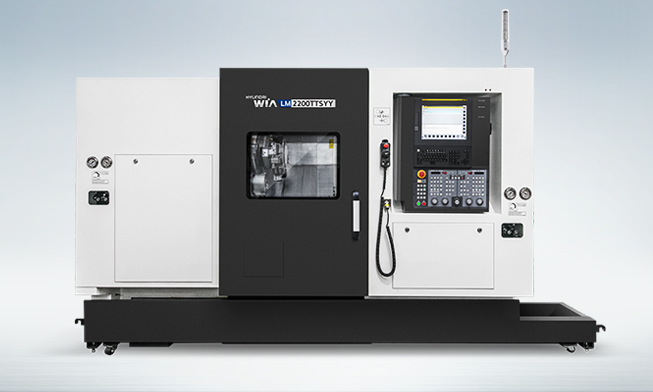
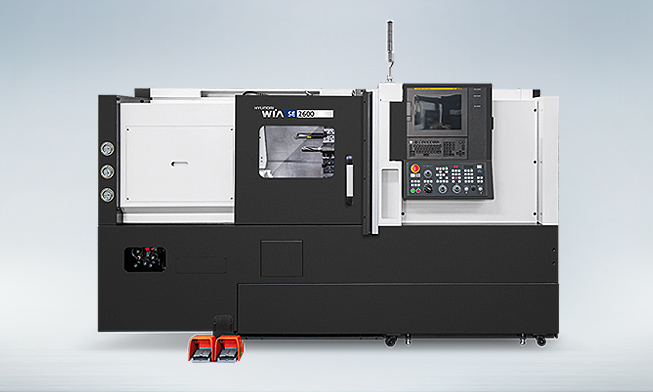
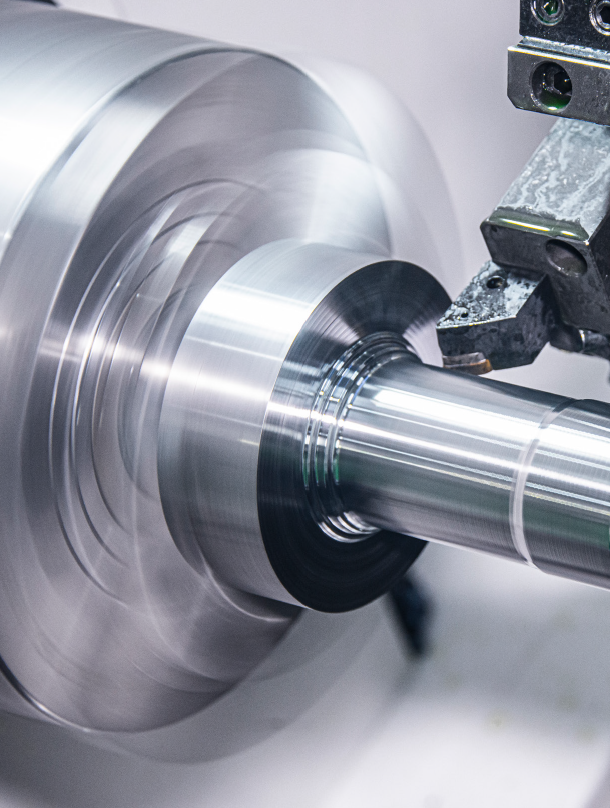
Designed for machining rotationally symmetric parts. They perform turning, drilling, boring, threading, and other turning operations.
Key features:
- machining of a rotating workpiece;
- high accuracy and repeatability;
- production of shafts, bushings, flanges, rings, couplings, and other rotationally symmetric parts.
Vertical machining centers
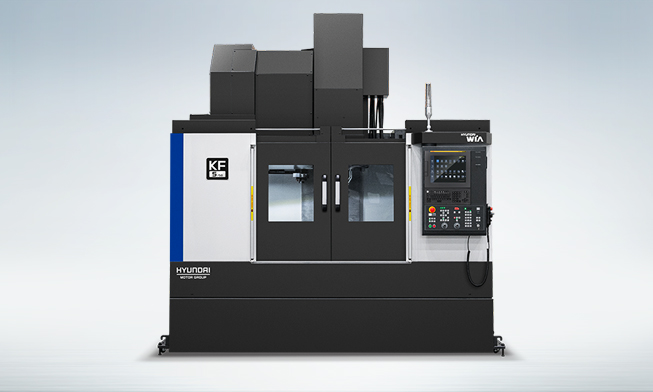
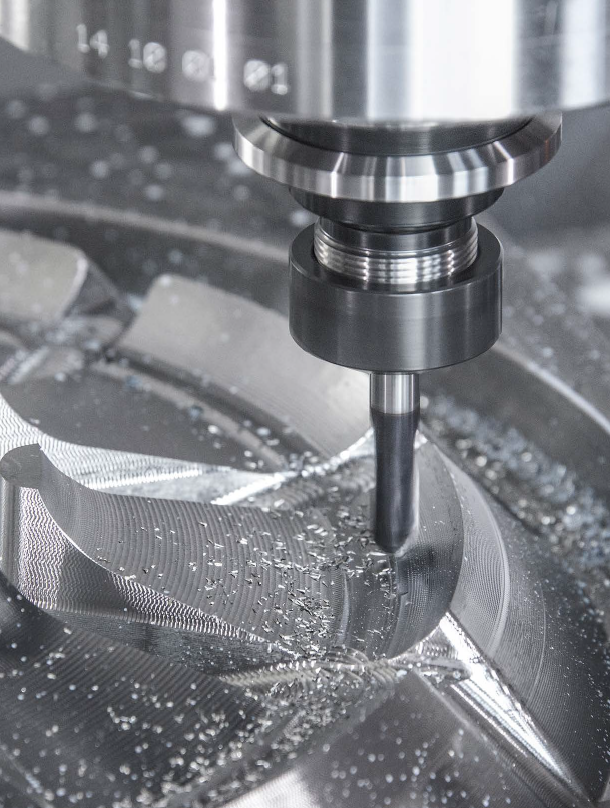
Designed for machining flat surfaces, contours, holes, and parts with complex geometries. They are used to manufacture prismatic components, molds, dies, and production tooling.
Key features:
- the vertical spindle orientation provides convenient access to the work area;
- perform a wide range of milling and drilling operations;
- combine high accuracy, productivity, and versatility.
Horizontal machining centers (HMC)
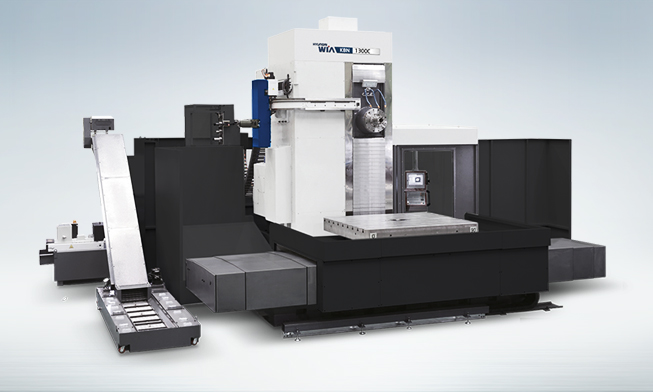
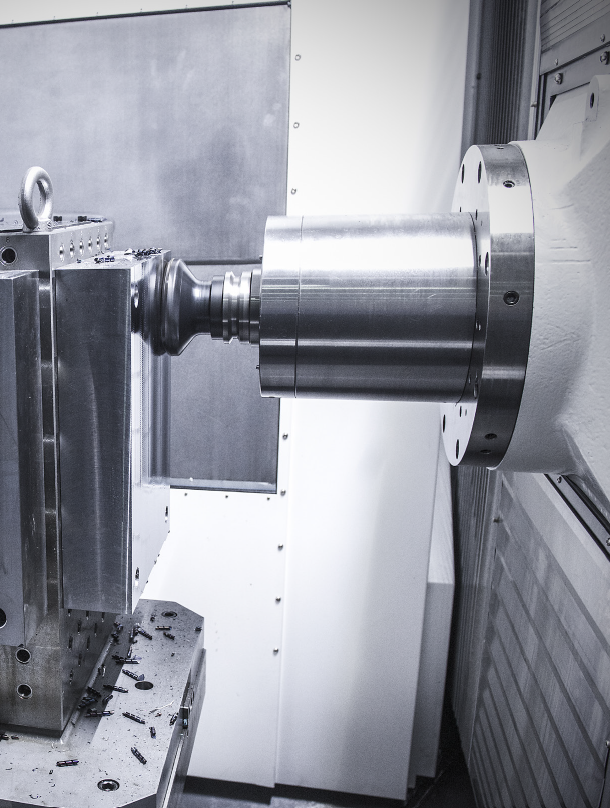
Designed for high-productivity machining of prismatic components from several sides in a single setup.
Key features:
- the horizontal spindle orientation provides efficient chip evacuation;
- allow comprehensive machining of parts with a minimal number of setups;
- are used in the automotive, aerospace, energy, and other engineering industries.
Five-axis machining centers
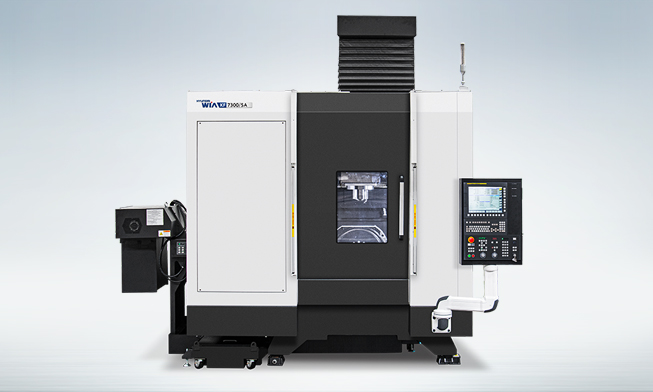
Designed for machining parts with complex three-dimensional geometries in a single setup.
Key features:
- simultaneous control of three linear and two rotary axes;
- provide optimal tool orientation and access to difficult-to-reach surfaces;
- improve accuracy and reduce the number of setups.
Mill-turn centers
Designed for complete machining of parts in a single setup by combining turning, milling, drilling, and threading operations.
Key features:
- integrate a turning spindle and a milling unit;
- minimize the number of setups and errors caused by repeated workpiece positioning;
- provide high productivity when manufacturing parts with complex geometries.
Key differences
Despite sharing a similar operating principle, each type of CNC metal-cutting machine tool has its own design features and area of application.
| Machine type |
Primary application |
Main advantages |
| CNC lathe |
Machining of rotationally symmetric parts such as shafts, bushings, flanges, rings, and other components.
|
High accuracy when machining rotational parts, high productivity, and a wide range of turning operations.
|
| Vertical machining center |
Comprehensive machining of prismatic components, plates, molds, dies, production tooling, and parts with complex geometries.
|
Versatility, automatic tool changing, and the ability to perform multiple operations in a single workpiece setup.
|
| Horizontal machining center (HMC) |
Batch and mass production of prismatic components and large workpieces.
|
Efficient chip evacuation, multi-sided machining capability, and high productivity.
|
| Five-axis machining center |
Machining of parts with complex three-dimensional geometries.
|
Simultaneous five-axis control, fewer setups, and high-accuracy machining of complex surfaces.
|
| Mill-turn center |
Complete turning and milling of parts in a single setup.
|
Shorter production cycles, fewer setups, and improved accuracy through single-setup machining.
|
Criteria for selecting a CNC metal-cutting machine tool
When selecting a CNC metal-cutting machine tool, it is important to consider not only its technical specifications, but also how well the equipment meets the production requirements, as this directly determines machining accuracy, productivity, and overall cost-effectiveness.
Type and complexity of machining
Machine selection primarily depends on the required machining operations. CNC lathes are used for rotationally symmetric parts, while milling machines and machining centers are used for prismatic components and parts with complex geometries. When several operations must be performed in a single workpiece setup, mill-turn or five-axis machining centers are the most appropriate solutions.
Work envelope and maximum workpiece dimensions
The work envelope must provide sufficient space for the workpiece, cutting tool, and production tooling. Insufficient axis travel limits machining capabilities and the use of additional equipment.
Positioning accuracy and repeatability
Positioning accuracy and repeatability determine the ability of a CNC machine tool to reach and consistently reproduce programmed coordinates. These characteristics directly affect machining accuracy and part quality, especially in batch and mass production.
Structural rigidity
Structural rigidity determines the machine’s resistance to machining loads and affects machining accuracy, vibration levels, surface quality, and the ability to operate under demanding cutting conditions.
Spindle characteristics
Spindle characteristics — including rotational speed, power, torque, drive type, and cooling system — determine the efficiency of machining different materials and the applicable range of cutting tools.
Computer numerical control system
When selecting a CNC system, its functionality, integration with CAD/CAM systems, and the availability of technical support, software updates, and personnel training should all be considered.
Level of automation
Modern machine tools can be equipped with automatic tool changers, measurement systems, pallet changers, and robotic workpiece loading systems, increasing productivity and reducing non-cutting time.
Reliability and service support
The availability of spare parts, service support, technical documentation, and post-warranty assistance are important selection criteria. These factors directly influence equipment downtime and production continuity.
Operating costs
When selecting a machine tool, it is important to consider not only the purchase price, but also operating costs, including electricity consumption, cutting tools, metalworking fluids, maintenance, repairs, and modernization.
Advantages of WIA Machine Tools solutions
WIA Machine Tools is a manufacturer of CNC metal-cutting machine tools and part of the South Korean HYUNDAI WIA Corporation. The company develops and manufactures metal-cutting equipment used in the automotive, aerospace, energy, medical, and other engineering industries.
The WIA Machine Tools product range includes CNC lathes, vertical and horizontal machining centers, five-axis machining centers, mill-turn centers, and boring machines, enabling customers to select suitable equipment for a wide variety of production tasks.
The main advantages of WIA Machine Tools equipment include:
-
Rigid construction — cast machine beds and optimized load-bearing structures provide machining stability and effective vibration damping.
-
High accuracy — precision guideways, spindle units, and servo drives ensure consistent machining accuracy and repeatability.
-
Extensive product range — CNC lathes, vertical and horizontal machining centers, five-axis machining centers, and mill-turn centers for a wide range of production requirements.
-
Automation support — automatic tool changing, integration with robotic systems, and automated workpiece loading.
-
FANUC and Siemens CNC systems — advanced programming capabilities and integration with CAD/CAM systems.
-
Reliability in batch production — the equipment is designed for long-term continuous operation with minimal downtime.
One of the key strengths of WIA Machine Tools is its combined expertise in machine tool manufacturing, automotive engineering, and automation. This expertise delivers high productivity, stable machining performance, and seamless equipment integration into modern production systems.
Expertise and support from TECHNICAL CLUSTER LLC
TECHNICAL CLUSTER LLC is a team of specialists with professional technical qualifications that helps industrial companies select, procure, and implement modern metal-cutting equipment while providing comprehensive support throughout the project.
As an official representative of the renowned South Korean manufacturer WIA Machine Tools in Ukraine, we provide a complete range of services for companies in the engineering, metalworking, and defense industries:
- equipment selection;
- delivery;
- installation;
- commissioning;
- personnel training;
- professional consultation;
- service and maintenance;
- an individual approach to every project.
Select a CNC machine tool tailored to your production requirements with the support of our experts and comprehensive technical assistance — from initial consultation and equipment selection to commissioning and production launch. Invest in accuracy, productivity, and reliability.