

CNC Turning and Milling Machines


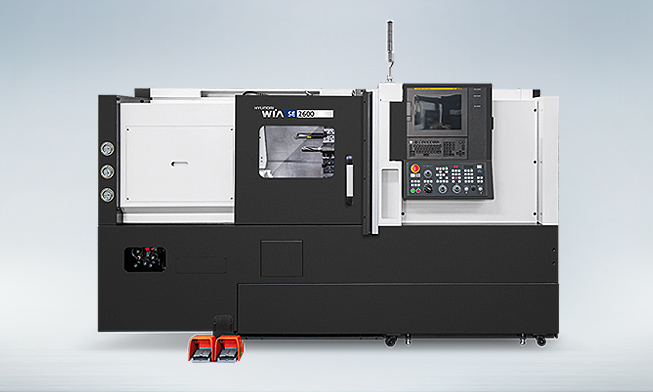
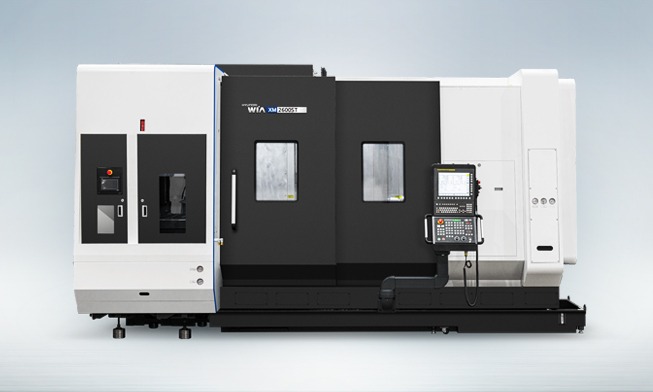
When manufacturing complex parts, transferring a workpiece between turning and milling machines increases auxiliary time and the number of repeated setups. A CNC turn-mill machine makes it possible to combine several types of machining on one machine, reduce the number of setups and perform more operations within a single technological cycle.
Turning remains the primary machining process on this type of equipment, while driven tooling and a controlled C-axis expand the machine's capabilities, allowing drilling, milling and other machining operations to be performed on the same part.
Equipment features
A CNC turn-mill machine differs from a conventional turning center primarily in its ability to use driven tooling. In conventional turning, the workpiece rotates while the cutting tool performs the required movements. Driven tools have their own rotary drive, allowing drills, milling cutters and other tools to be installed directly in the turret for additional machining operations.
The controlled C-axis also plays an important role. It provides controlled angular positioning of the spindle and the workpiece clamped in it, which is required for drilling holes at specified angular positions, machining slots, flats and other features. If the machine is additionally equipped with a Y-axis, the tool can move away from the workpiece centerline, expanding milling capabilities and allowing more complex features to be machined.
Computer numerical control coordinates axis movements, spindle rotation, driven tooling and other functions specified by the program. At the same time, machining accuracy and stability depend not only on the CNC system, but also on structural rigidity, spindle and drive characteristics, tooling, cutting parameters and a properly developed machining process.
Machine configuration is selected according to the specific part. Important factors include maximum workpiece diameter and length, material, weight, required geometry, the range of operations and planned productivity. For one application, driven tooling and a C-axis may be sufficient, while another may require an additional Y-axis or other equipment.
Main applications
A CNC turn-mill machine for metal is particularly effective for manufacturing rotational parts that, in addition to turned surfaces, include holes, slots, flats, milled planes or other features that are not axisymmetric. Typical parts include shafts, bushings, flanges, couplings, fittings, discs and other mechanical engineering components.
This equipment is used in both small-batch and serial production. Its main advantage is not its suitability for one specific production type, but the ability to perform a significant part of the technological cycle without transferring the workpiece to a separate milling machine.
A CNC turn-mill center can be supplied in different configurations. Depending on the model, the machine may additionally be equipped with a Y-axis, sub-spindle, additional turrets or automation systems. These features are not standard on every machine, so the configuration is selected according to the specific technological task.
Key advantages
Using one machine for several operations provides a number of practical production advantages:
- reducing the number of workpiece setups;
- reducing auxiliary time;
- reducing the influence of repeated workpiece referencing on accuracy;
- performing turning, drilling and milling operations on one machine;
- the ability to manufacture parts with more complex geometry;
- the possibility of automating the machining process.
A CNC turn-mill machining center makes it possible to organize the manufacture of parts more efficiently when the capabilities of a conventional two-axis lathe are insufficient. At the same time, the milling function does not eliminate the need to select the correct tooling, cutting parameters and technological sequence of operations.
How to select and purchase a machine in Ukraine?
When selecting equipment, it is important to consider workpiece dimensions and material, the required geometry of machined features, the range of operations, accuracy, production volume and the required level of automation. Machine price is also important, but the optimal configuration should primarily be determined by the actual technological process.
TECHNICAL CLUSTER specialists will help select suitable WIA Machine Tools turn-mill equipment according to part characteristics and production requirements. The company is the official representative of WIA Machine Tools in Ukraine and provides equipment selection, supply, commissioning and service support.